
 German
 English
 Russian
 Italian
 Japanese
 Korean

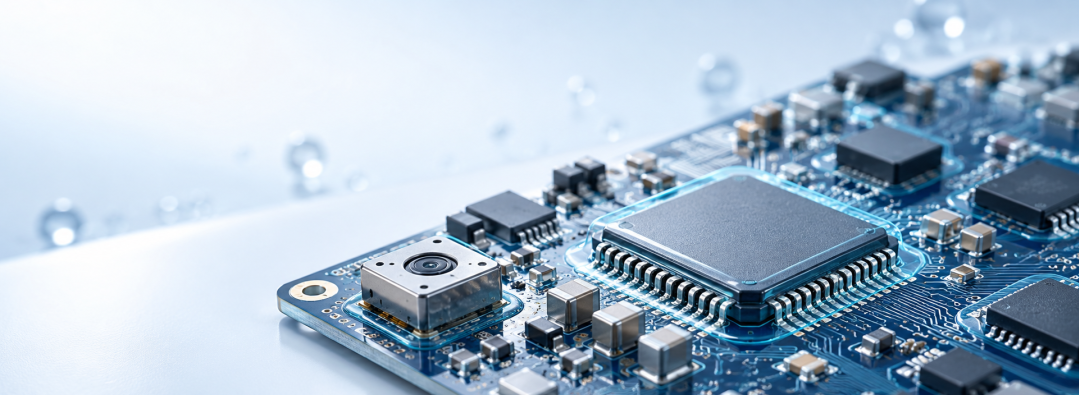
As electronic devices continue to become smaller and more highly integrated, component layouts are becoming increasingly dense, placing greater demands on protective coatings.
Moisture, perspiration, and certain corrosive substances can compromise electronic circuit performance. Meanwhile, limited assembly space and complex component geometries impose stricter requirements on coating thickness, uniformity, and coverage.
Parylene coating is a polymer thin-film protection technology based on chemical vapor deposition (CVD). It forms a thin, conformal protective layer on electronic components, providing moisture barrier properties, electrical insulation, and environmental protection.
For electronics manufacturers, an important consideration is not only how to achieve the desired protective performance, but also how to consistently reproduce validated coating results when transitioning from prototyping to mass production.
1. What Are the Key Benefits of Parylene Coating?
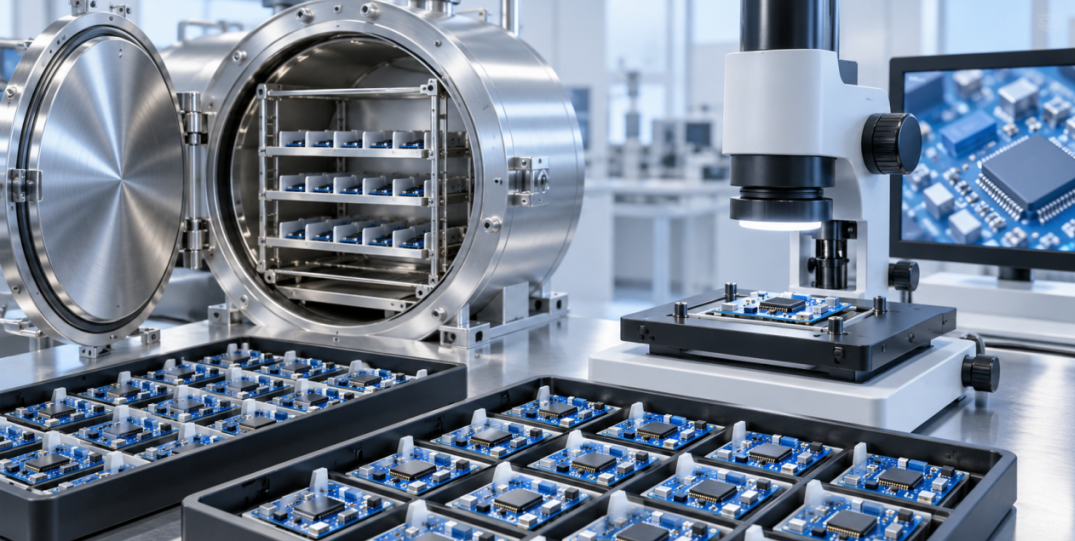
Parylene coating is a surface protection technology that uses a vacuum chemical vapor deposition (CVD) process to form a polymer thin film.
During deposition, the Parylene precursor is vaporized and thermally cleaved into reactive monomers. These monomers subsequently deposit and polymerize on the substrate surface, forming a continuous, conformal protective film.
Unlike conventional liquid-applied coatings, Parylene is deposited from the vapor phase. Its key advantages for precision electronics include thin-film protection, conformal coverage, and electrical insulation.
| Protective Property | Benefits for Precision Electronics |
|---|---|
| Moisture and Environmental Barrier | Helps reduce the exposure of coated surfaces to moisture and certain corrosive substances, minimizing the risk of environmentally induced corrosion. |
| Electrical Insulation | Provides surface electrical insulation for electronic components. Actual performance should be verified based on coating thickness, product geometry, and operating conditions. |
| Conformal Coverage | Conforms to edges, curved surfaces, and certain narrow gaps, making it suitable for protecting complex electronic structures. |
| Thin-Film Protection | Minimizes additional dimensions and weight, making it suitable for compact electronic device designs. |
How Does Parylene Coating Compare with Conventional Conformal Coatings?
Both Parylene and conventional conformal coatings are widely used to protect printed circuit boards (PCBs) and electronic components. However, they differ in their deposition methods and coverage characteristics.
| Comparison | Conventional Liquid-Applied Conformal Coatings | Parylene Coating |
|---|---|---|
| Coating Process | Applied by spraying, dipping, or selective coating, followed by drying or curing. | Deposited and polymerized directly on the substrate through a CVD process. |
| Surface Coverage | Coating uniformity depends on application method, material flow properties, and component geometry. Complex areas may receive insufficient coverage. | Facilitates conformal coverage of edges, curved surfaces, and complex geometries, allowing relatively thin and continuous films to be formed. |
A key advantage of Parylene coating is its ability to provide conformal thin-film protection for complex electronic structures through vapor-phase deposition.
However, actual coating coverage depends on component geometry, material selection, and deposition conditions. Special features, such as deep cavities and narrow gaps, should be evaluated through sample coating trials to verify coating coverage.
2. Applications of Parylene Coating in Precision Electronics
Parylene coating can be used in various electronic applications, including industrial control systems, precision sensors, communication electronics, and consumer devices.
Since operating environments, component structures, and functional requirements vary across applications, Parylene coating solutions should be tailored to the specific product.
| Application | Typical Products | Key Coating Considerations |
|---|---|---|
| Industrial Control Electronics | Industrial control boards, data acquisition modules, and instrumentation circuits | Meet environmental protection and electrical insulation requirements while maintaining reliable connections, thermal management, and serviceability. |
| Precision Sensors | Sensor circuits and miniature sensing components | Protect relevant circuitry while identifying sensing windows, moving structures, and electrical contact areas that require masking. |
| Communication Electronics | Communication control boards, power supply modules, and connector assemblies | Evaluate moisture and contamination risks, and verify the electrical performance of high-frequency-sensitive areas. |
| Unterhaltungselektronik | Wearable devices, wireless earbuds, and internal circuits of portable electronic products | Design protection against perspiration and moisture while accommodating compact structures and preserving acoustic openings and electrical contacts. |
For these applications, the key to an effective Parylene coating solution is to clearly define the areas requiring protection while ensuring that the coating does not interfere with the product’s original electrical, mechanical, or other functional characteristics.
For example, industrial control boards require a balance between insulation protection and reliable electrical connections. Precision sensors must be protected without affecting their sensing functions, while wearable electronics require particular attention to perspiration, moisture exposure, and internal space limitations.
Therefore, before coating begins, the appropriate material, coating areas, target thickness, and necessary functional validation requirements should be determined based on the product’s structure and operating environment.
3. Parylene-Beschichtung Dienstleistungen: Quality Control from Prototyping to Mass Production
For precision electronics manufacturers, successful Parylene coating involves more than meeting protection requirements during initial sample testing. Consistent coating quality and process traceability are equally important during mass production.
The key to transitioning from prototyping to mass production is to translate validated materials, coating thickness specifications, masking requirements, and process parameters into clearly defined manufacturing and acceptance standards.
Step 1: Define Coating Requirements and Acceptance Criteria
Before starting the Parylene coating process, manufacturers should clearly define and document the product revision, coating areas, target thickness, masking areas, and inspection methods.
Electrical contacts, soldering areas, and precision mating surfaces should be clearly identified using technical drawings or photographs to prevent unintended coating from affecting product functionality.
Step 2: Control Incoming Product Quality and Surface Preparation
Oils, residues, and other contaminants on the substrate surface may adversely affect Parylene coating adhesion.
Appropriate cleaning, surface treatment, and masking procedures should therefore be established based on the substrate material, surface condition, and application requirements.
Clear operating procedures help improve process consistency and reduce coating-related quality risks.
Step 3: Validate Production Loading and Deposition Conditions
Once prototype samples have passed validation, coating thickness distribution and coverage of critical areas must also be verified under batch production conditions.
Parylene material grade, precursor loading quantity, component loading configuration, equipment condition, and deposition parameters should remain consistent with the validated process.
For electronic components with complex structures, particular attention should be paid to coating coverage in different areas of the product.
Step 4: Inspect Coating Quality and Verify Product Functionality
After the Parylene coating process is completed, the necessary quality inspections should be performed according to the product’s technical requirements and agreed acceptance criteria.
Inspection items may include coating appearance, thickness, adhesion, and relevant electrical or functional tests.
Coating quality is determined not only by whether a film has been successfully deposited, but also by whether it meets the intended protection requirements without compromising normal product operation.
Step 5: Maintain Production Records and Delivery Control
To support consistent batch production, manufacturers should maintain records of material batches, critical process parameters, and quality inspection results.
Surface preparation, masking, deposition, demasking, inspection, and packaging should also be incorporated into the overall production and delivery schedule.
Whenever incoming components, product structures, or protection requirements change, their potential impact on the coating process should be evaluated, and the process plan updated when necessary.
Establishing clear process requirements and acceptance criteria throughout production helps minimize batch-to-batch quality variations and improve the consistency of Parylene coating services.
4. FANGCUNDA: Integrated Parylene Materials, Equipment, and Coating Solutions
Shenzhen FCD Technology Co., Ltd. provides Parylene dimer materials, Parylene coating equipment, coating services, and related process solutions, supported by in-house research and development capabilities in both materials and equipment.
In precision electronics protection, material properties, equipment capabilities, and coating processes are closely interconnected. Focusing on only one of these aspects may not fully address the protection and production requirements of complex electronic products.
By integrating its capabilities in Parylene materials, equipment, and coating services, FANGCUNDA offers coordinated, one-stop Parylene coating solutions tailored to customers’ product structures, operating environments, and manufacturing needs.
Parylene Material Supply
FANGCUNDA supports the selection and supply of Parylene materials based on customers’ operating conditions, protection objectives, and validation requirements.
Parylene-Beschichtung Dienstleistungen
Based on the structural characteristics and protection requirements of precision electronic products, FANGCUNDA provides coating process assessments, prototype coating trials, and coordination for subsequent batch production.
Parylene-Beschichtungsanlagen
For customers planning to establish in-house coating capabilities, FANGCUNDA provides equipment solutions based on product dimensions, loading configurations, production capacity targets, and process requirements.
By integrating material selection, equipment solutions, and coating services, FANGCUNDA aims to provide coordinated Parylene protection solutions that help customers efficiently advance from process validation to mass production.
If you are evaluating Parylene coating solutions for your electronic products, we welcome you to contact Shenzhen FCD Technology Co., Ltd.
Share your product samples, technical drawings, or specific protection requirements with our team to explore suitable Parylene materials, coating processes, and production solutions.