Parylene C offers an optimal balance of barrier performance, dielectric properties, processing efficiency, and cost, making it the most widely adopted parylene coating for demanding industrial and medical applications.
JETZT ANFRAGE SENDEN
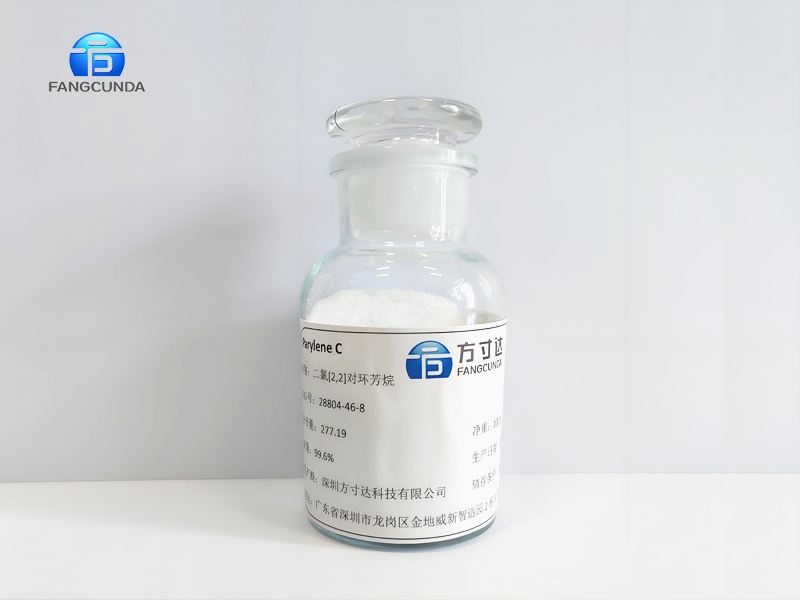
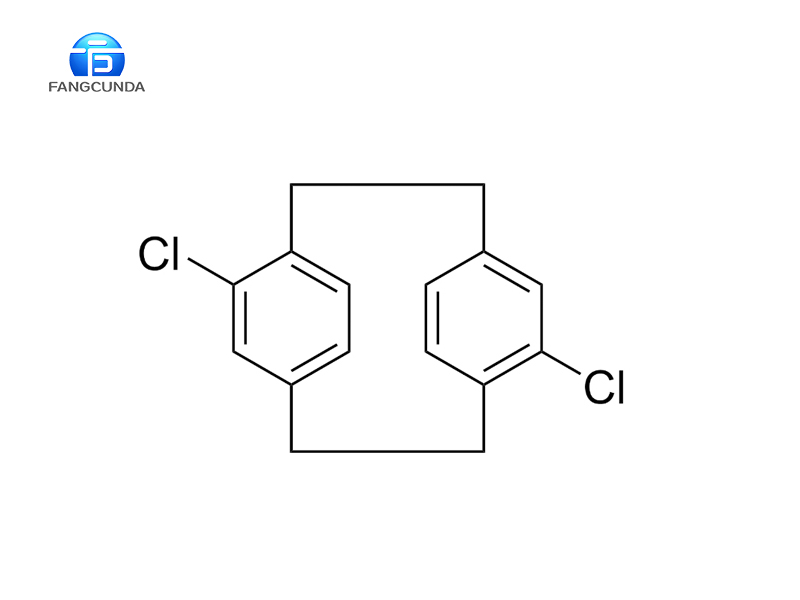
Parylene C dimer (Dichlorodi-p-xylylene) is a high-performance coating material widely used to provide effective barriers against moisture, gases, and corrosive environments, as well as excellent dielectric protection.
By introducing a chlorine atom into the molecular structure, Parylene C exhibits significantly lower permeability than Parylene N, making it one of the most commonly used parylene types in high-reliability applications.
Parylene C coatings are deposited via a chemical vapor deposition (CVD) process, forming uniform, pinhole-free, and highly conformal films on complex three-dimensional substrates.
| Product Name: | Dichlorodi-p-xylylene CAS: 28804-46-8 |
| Synonyms: | 5,11-dichlorotricyclo[8.2.2.24,7]hexadeca-4,6,10,12,13,15-hexaene;6,12-Dichlorobis(p-xylylene);DICHLORO-[2,2]-PARACYCLOPHANE;Dichlorodi-p-xylylene;Parylene C ,92%;Dichlorodi-p-xylylen;Dichlorodi-1,4-xylylene;Dichloro-[2,2]-paracyclophane (Parylene C ) |
| CAS: | 28804-46-8 |
| MF: | C16H14Cl2 |
| MW: | 277.193 |
2. Physical & Chemical Properties
| Purity | 99% |
| Melting point | 165~167℃ |
| Density | 0.671 g/cm³ (20 °C) |
| Vapor Pressure | 0.002 Pa (25 °C) |
| Water Solubility | 230 μg/L (20 °C) |
| Form | powder |
Outstanding moisture and gas barrier performance
Extremely low permeability provides long-term protection against moisture, chemicals, and corrosive gases.
Excellent dielectric properties
Ideal for insulation and protection of microelectronic and precision electronic components.
Superior conformality and adhesion
Forms uniform, pinhole-free coatings even on complex geometries.
High deposition efficiency
Faster deposition rates compared to other parylene types allow thicker coatings with reduced process time.
Good biocompatibility
Suitable for various biomedical and implantable applications
Implantable medical devices
Moisture- and corrosion-resistant encapsulation of electronics
Dielectric protection for high-reliability electronic assemblies
Biocompatible coatings for medical devices
BioMEMS and micro-medical components
Applications requiring compliance with IPC-CC-830 or MIL-I-46058C standards
Haben Sie eine Frage und möchten Sie mit unseren Experten in Kontakt treten? Wir freuen uns auf Ihre Anfrage!

 German
  English
  Russian
  Italian
  Japanese
  Korean