
 Japanese
  English
  Russian
  German
  Italian
  Korean
Parylene Coating Technology and Its Applications Across Industries
Among various coating materials, Parylene coatings stand out for their unique vapor deposition process and exceptional protective performance, making them widely used in industries such as electronics, medical, and automotive. FANGCUNDA a leading provider of Parylene coating technology in China, specializes in offering high-quality coating solutions to its clients. This article will provide an in-depth introduction to the common Parylene dimer types, helping you choose the most suitable product to meet specific application requirements.
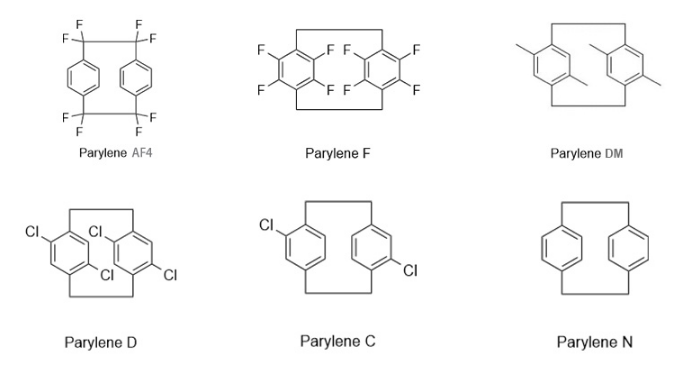
Parylene Coating Types and Their Applications
1. Parylene N: The Preferred Choice for High Purity and Electrical Insulation
Parylene N is the most basic type of Parylene coating, known for its excellent electrical insulation properties and extremely high purity. It forms a uniform, pinhole-free, ultra-thin coating that effectively protects electronic components, such as chips and circuit boards, from moisture and dust. In electronics industry, Parylene N is ideal for electrical insulation and surface protection. However, its chemical resistance is relatively weak, making it unsuitable for highly corrosive environments.
Typical Applications: Electronic component protection, chip and circuit board coatings.
2. Parylene C: Exceptional Chemical Resistance
Compared to Parylene N, Parylene C offers superior chemical resistance, with the ability to withstand acids, alkalis, and salt sprays. It is particularly suited for industries such as automotive electronics and industrial control equipment, where chemical exposure is a concern. While its electrical insulation performance is slightly inferior to that of Parylene N, it is still an ideal coating for protecting electronic devices from chemical corrosion.
Typical Applications: Automotive electronic sensors, protection for industrial equipment.
3. Parylene F: Low Friction and High-Temperature Resistance
By incorporating fluorine atoms, Parylene F features an extremely low coefficient of friction and excellent high and low-temperature resistance, making it capable of performing stably in extreme environments ranging from -200°C to 260°C. This unique property makes it an ideal coating for aerospace applications, where it effectively protects aircraft components. Additionally, Parylene F is widely used for coating precision mechanical components, though it is relatively expensive.
Typical Applications: Aerospace component protection, precision mechanical coatings.
4. Parylene AF4: Protection in High-Temperature Environments
Parylene AF4 is specifically designed for high-temperature environments, capable of withstanding extreme temperatures up to 350°C. It is commonly used in industries such as petrochemicals and high-temperature industrial furnaces, where it protects electronic components and metal parts from oxidation and corrosion. Due to its higher preparation cost, Parylene AF4 is typically used in applications where extreme high-temperature resistance is essential.
Typical Applications: High-temperature industrial environments, petrochemical industry electronic device protection.
Overview of Parylene Coating Applications Across Industries
Medical Industry: Biocompatibility of Parylene
In the medical industry, Parylene N and Parylene C are commonly used coatings, particularly for devices that require excellent biocompatibility, such as catheters and stents. For electronic devices, Parylene N is preferred for electrical insulation, while Parylene C, with its superior chemical resistance, is more suitable for medical devices exposed to harsh chemical environments.
Automotive Industry: High-Temperature and Electronic Protection
In the automotive industry, Parylene AF4 is often used in high-temperature environments near engines due to its exceptional heat resistance. Parylene C, on the other hand, is widely used for protecting automotive electronic components, such as sensors and control systems.
Conclusion
Different types of Parylene coatings each have unique characteristics, making them suitable for various application scenarios. When choosing the appropriate Parylene coating, it is essential to consider not only the material’s performance but also the industry requirements and budget limitations. Shenzhen Fangcun Da Technology, with its extensive experience and expertise, provides tailored Parylene coating solutions for various industries, helping you maximize the protection of your devices in harsh environments.