
 Korean
  English
  Russian
  German
  Italian
  Japanese
In high-end manufacturing, the reliability and durability of products directly determine their service life. As manufacturing precision increases, the demand for advanced protective materials grows correspondingly.
What is Parlyene Dimer?
Parlyene dimer is an organopolymer material synthesized chemically, with a primary molecular structure of poly-p-xylylene. It appears as white to off-white crystalline dimer. Through the Parlyene vacuum chemical vapor deposition (CVD) coating process, it forms an ultrathin, transparent, conformal, uniform, and pinhole-free dense protective film.
Because of these properties, Parlyene is known as the “invisible protective armor for precision devices”, and is widely used in:
- Aerospace and defense
- Medical devices
- Precision electronics and other high-end manufacturing fields

Classification of Parlyene Dimer
Currently, the industry recognizes six main types of Parlyene dimer, divided into halogenated and non-halogenated categories:
- Halogenated Parlyene: Parlyene C, Parlyene D, Parlyene F, Parlyene AF4
- Non-halogenated Parlyene: Parlyene N, Parlyene DM
1. Halogenated Parlyene
Halogenated Parlyene contains halogen atoms (fluorine F, chlorine Cl) as substituents. Halogen elements include fluorine (F), chlorine (Cl), bromine (Br), and iodine (I). Due to the high toxicity of bromine and the instability of iodine, bromine- or iodine-containing Parlyene is generally avoided.
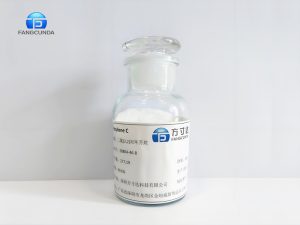
Parylene C Dimer
- Parlyene C: Contains one chlorine atom on the aromatic ring. The resulting film exhibits high barrier performance, water and dust resistance, and good dielectric properties. It can be deposited quickly, with a temperature tolerance of around 100°C. Mainly used in consumer electronics.
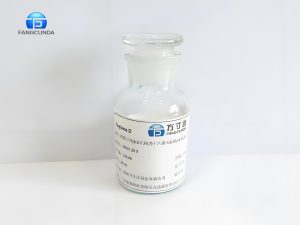
Parylene D Dimer
- Parlyene D: Contains four chlorine atoms on the aromatic ring, offering improved barrier performance over C-type.
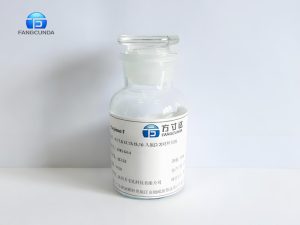
Parylene F Dimer
- Parlyene F: All eight hydrogen atoms on the benzene ring are replaced with fluorine, resulting in films with excellent moisture and chemical resistance, superior electrical insulation, and UV stability, with a temperature tolerance up to 250°C. Used in aerospace, electronics, and medical devices.
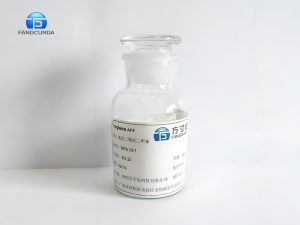
Parylene AF4 dimer
- Parlyene AF4: The α-hydrogen atoms of the N-dimer are replaced with eight fluorine atoms. The resulting film has low friction, low dielectric constant, UV resistance, and short-term high-temperature tolerance up to 450°C, making it suitable for precision aerospace components and military equipment.
2. Non-Halogenated Parlyene
Non-halogenated Parlyene contains no halogen atoms, making it suitable for applications with strict environmental requirements.
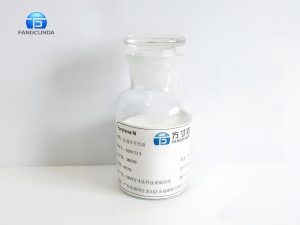
Parylene N Dimer
- Parlyene N: Basic non-halogenated dimer with good electrical insulation, strong penetration, and excellent lubricity, commonly used in MEMS, magnetic materials, and devices requiring halogen-free certification.
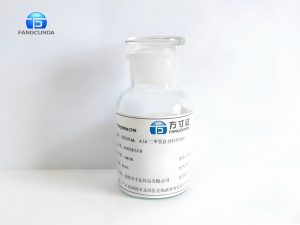
Parylene DM dimer
- Parlyene DM: Contains methyl (-CH₃) substituents. Its barrier properties are close to C-type, while electrical and mechanical performance are superior, with a temperature tolerance around 80°C. Suitable for environmentally sensitive industries.
Common Properties of Parlyene Dimer
Despite differences in substituents, all Parlyene dimer share several key characteristics:
- High insulation performance (>5000 V/mil)
- Low-temperature resistance (<-200°C)
- Water and dust resistance (IP68 and above)
- Excellent biocompatibility
- Superior vacuum stability
- Resistance to acids, bases, solvents, and salt spray
- Radiation resistance
The different substituents, however, result in significant variations in temperature tolerance, friction coefficient, UV stability, and chemical barrier properties, allowing users to select the appropriate type for specific applications.