
 Korean
  English
  Russian
  German
  Italian
  Japanese
Building a Robust Automotive-Grade Reliability Barrier to Safeguard Vehicle Safety
The safe operation and driving range of new energy vehicles (NEVs) rely heavily on an efficient, precise, and stable thermal management system.
From battery pack thermal control circuits and heat pump air-conditioning assemblies to electronic actuators and various onboard sensors, these critical components collectively form the “thermal regulation center” of new energy vehicles. They play a vital role in maintaining power system performance, extending battery service life, and enhancing overall vehicle safety.
However, as NEVs rapidly evolve toward higher integration, miniaturization, and intelligent control, electronic components within thermal management systems are continuously exposed to increasingly harsh operating environments, including:
• Condensation and moisture ingress;
• High and low temperature cycling stress;
• Salt spray corrosion;
• Chemical media exposure;
• Insulation performance degradation.
These hidden reliability risks are becoming critical factors affecting the long-term durability and stable operation of new energy vehicles.
Although traditional conformal coatings can provide a certain level of protection, their application limitations make it difficult to achieve complete coverage inside miniature valve bodies, fine-pitch PCBA assemblies, and complex structural gaps. This may result in protection blind spots and makes it challenging to meet the long-term automotive-grade reliability requirements of modern NEVs.
By contrast, Parylene conformal coatings, based on vapor deposition technology, utilize unique molecular-level encapsulation capabilities to form a continuous, uniform, and pinhole-free ultra-thin protective layer. As a result, Parylene is becoming an essential “invisible protective armor” for thermal management systems in new energy vehicles.
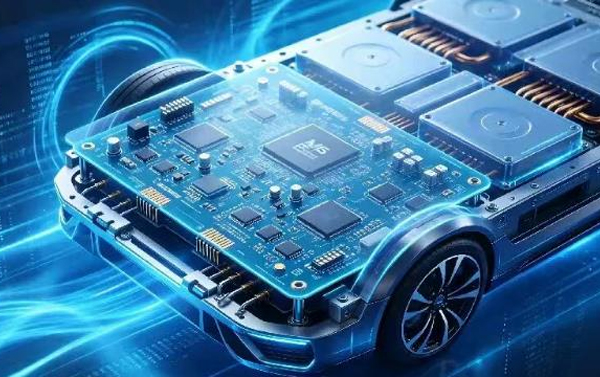
1. Electronic Oil Pump Protection: Overcoming Corrosion and Long-Term Reliability Challenges
Electronic oil pumps in new energy vehicles integrate precision electronic components such as PCBAs and sensors. During long-term operation, these components are exposed to challenging conditions including:
• Condensation intrusion;
• Corrosion from refrigerants and chemical substances;
• Repeated high and low temperature cycling.
These environmental stresses may lead to electronic component corrosion, insulation degradation, and reduced operational stability.
Through Parylene vapor deposition technology, electronic oil pump assemblies can achieve comprehensive, conformal, and void-free protection. A dense ultra-thin protective coating is formed directly on component surfaces.
With outstanding properties including:
• Excellent refrigerant corrosion resistance;
• Superior moisture barrier and insulation performance;
• Excellent resistance to thermal cycling;
Parylene coatings help electronic oil pumps meet demanding automotive reliability validation requirements, including 85°C/85%RH damp heat aging tests and thermal cycling tests.
By enhancing environmental adaptability and service life, Parylene has become a key protective technology for high-end electronic oil pumps requiring long-term stable operation.
2. Battery Pack Thermal Management Protection: Safeguarding the “Lifeline” of Data Acquisition
The battery pack thermal management module is a critical system responsible for ensuring battery safety, service life, and performance stability.
Core components such as:
• Battery Management System (BMS) PCBAs;
• Temperature monitoring sensors;
• Coolant flow monitoring components;
operate under complex conditions involving:
• Significant temperature variations;
• Enclosed operating environments;
• Potential condensation formation.
Moisture may penetrate through component leads, solder joints, and microscopic gaps, resulting in:
Electrical short circuits;
Signal drift;
Abnormal data acquisition.
These failures can directly affect the accuracy of battery management decisions and may even impact overall battery safety.
Using room-temperature vacuum chemical vapor deposition (CVD) technology, Parylene coatings utilize molecular deposition characteristics to penetrate micron-level gaps and form a continuous, uniform protective film over PCBs, electronic components, and sensing chips.
This protective layer effectively:
Blocks moisture penetration;
Prevents electrolyte corrosion;
Improves sensor data stability.
As a result, Parylene helps battery thermal management systems achieve higher automotive-grade reliability under demanding operating conditions.
3. Heat Pump Air Conditioning and Electronic Control System Protection: Ensuring Stable Operation of Precision Components
Heat pump air-conditioning systems and electronic control modules are essential components for comfort management and energy efficiency optimization in new energy vehicles.
Key components include:
• Thermal management solenoid valves;
• Electronic expansion valves;
• Air-conditioning control actuators.
These precision components often feature complex structures and micro-motion clearances, placing higher requirements on coating performance, including:
• Uniform coverage capability;
• Precise thickness control;
• Strong adhesion reliability.
Parylene enables true three-dimensional, pinhole-free conformal coating while maintaining an ultra-thin film structure that does not affect valve movement accuracy.
Its excellent moisture resistance, electrical insulation properties, and refrigerant corrosion resistance effectively reduce risks such as:
• Valve sticking caused by condensation;
• Electronic control failures;
• Precision mechanism malfunction.
This ensures stable operation of NEVs under extreme conditions such as high temperatures and severe cold environments.
4. High-Voltage Component Protection: Building an Electrical Safety Barrier for New Energy Vehicles
Thermal management systems in NEVs contain numerous high-reliability electronic components, including:
• Automotive power semiconductors;
• Thermal control units;
• High-voltage connection terminals.
These components require exceptional insulation performance and long-term operational stability.
With excellent dielectric properties, Parylene provides highly reliable insulation protection through an ultra-thin coating layer, effectively reducing:
• High-voltage creepage risks;
• Insulation degradation in humid environments;
• Potential electrical safety hazards.
This further enhances the overall operational safety and reliability of new energy vehicle thermal management systems.
Parylene: A Key Technology Choice for High-Reliability Electronic Protection in New Energy Vehicles
Today, Parylene coatings are widely used in automotive electronics, sensors, power devices, and other high-reliability electronic protection applications worldwide.
With advantages including:
• Molecular-level conformal coverage;
• Ultra-thin and highly uniform coating layers;
• Outstanding moisture resistance;
• High-performance electrical insulation;
• Excellent chemical corrosion resistance;
Parylene is becoming an important technology solution for improving environmental durability and extending the service life of critical electronic components in new energy vehicles.
FANGCUNDA: Customized Parylene Protection Solutions
FANGCUNDA has been deeply engaged in Parylene vacuum vapor deposition technology for many years, specializing in providing high-reliability and high-performance customized protective coating solutions for new energy vehicle thermal management systems.
Based on different application requirements, FANGCUNDA provides customized Parylene coating solutions for:
• Temperature and pressure sensors;
• BMS circuit boards;
• Thermal management solenoid valves;
• Power semiconductor devices;
• Precision electronic components.
These solutions deliver:
• Moisture protection;
• Electrical insulation;
• Chemical corrosion resistance;
• Enhanced environmental reliability.
Supported by standardized mass-production capabilities and strict automotive-grade quality management processes, FANGCUNDA provides comprehensive verification services, including:
• Coating thickness inspection;
• Adhesion testing;
• Accelerated aging evaluation;
• Reliability validation reports.
This ensures stable and reliable performance for every production batch.
While delivering high-quality protection solutions, FANGCUNDA continuously optimizes manufacturing processes and cost structures, breaking through the cost barriers of imported coating technologies.
With competitive cost advantages, faster delivery capabilities, and flexible customization services, FANGCUNDA helps new energy vehicle thermal management companies achieve advanced protection technology upgrades.
Building an Invisible Yet Essential Protective Barrier for the Core Components of New Energy Vehicles
FANGCUNDA is committed to providing advanced Parylene coating solutions that create a reliable, invisible protection shield — safeguarding the safety, durability, and long-term performance of next-generation electric vehicles.